
Context
Salesforce AppExchange is the world's leading enterprise app marketplace, serving millions of business users. When I joined, the platform faced a critical problem: it functioned as a directory, not a true marketplace.
The core problems:
Conversion rate of only 6.6% — customers struggled to acquire solutions and often gave up
A single "Get It Now" CTA for all listings, regardless of deal complexity
Enterprise procurement required lengthy offline negotiations, with sales cycles often exceeding 12 months
~15% revenue leakage due to reliance on partner-reported orders
My role: Design lead, end-to-end from user research to final deliverables.
User Research
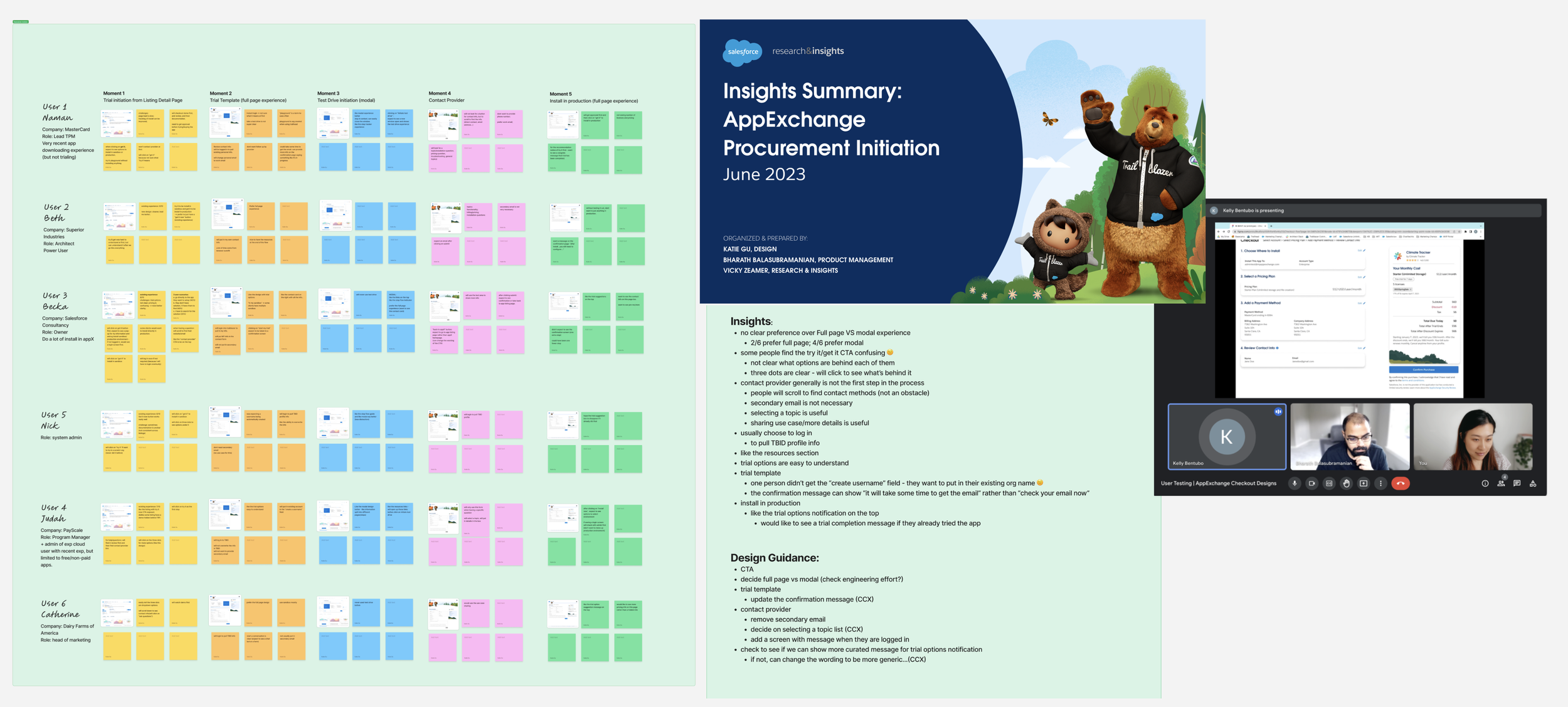
I partnered with user research team and conducted panel discussions and 1-on-1 user interviews with enterprise decision makers. Key findings:
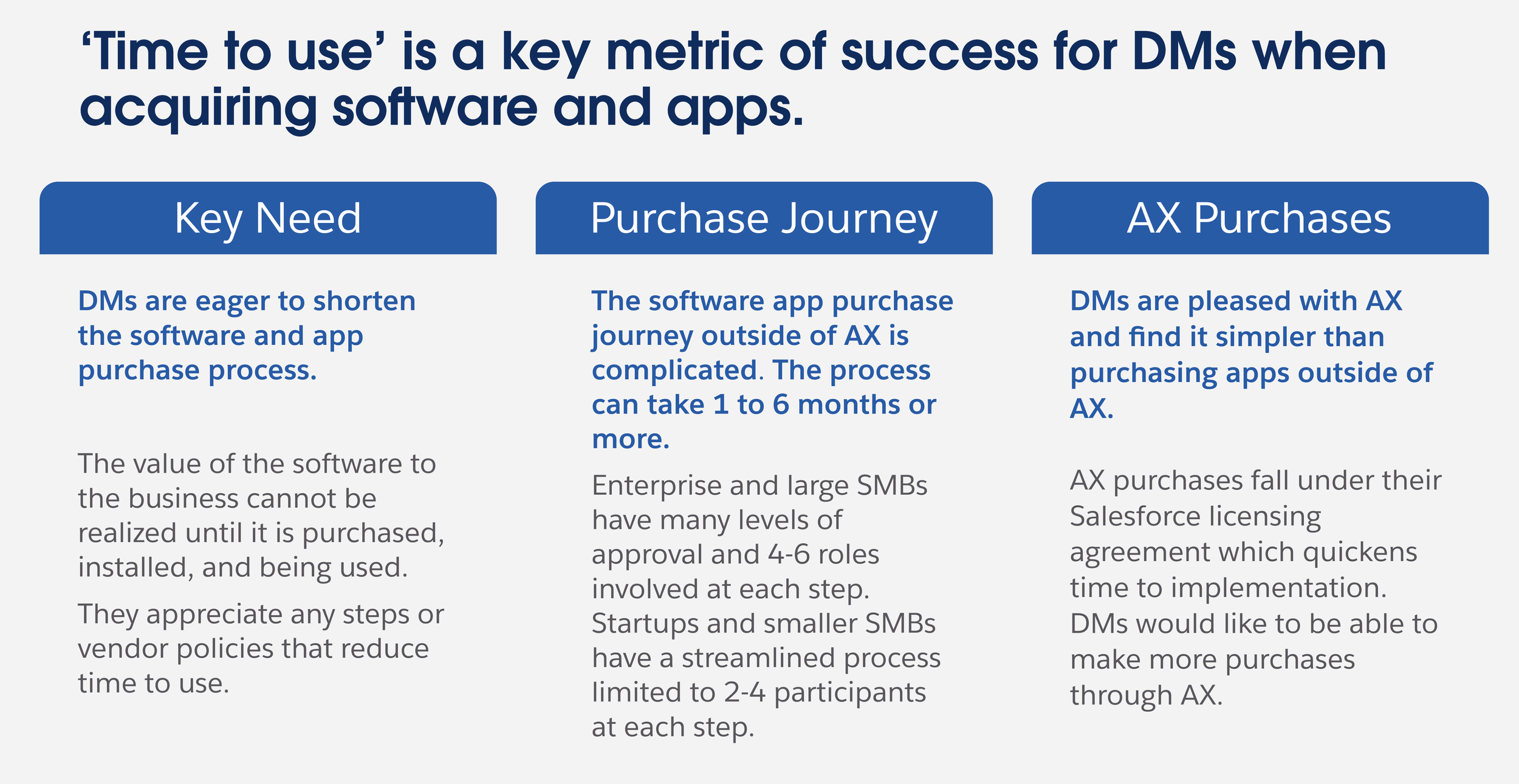
"Time to use" is the primary metric of success for buyers — the faster a solution can be purchased and deployed, the better
Enterprise procurement involves 4–6 stakeholders and can take 1–6 months outside of AppExchange
Buyers were willing to pay a premium if it meant staying within their existing Salesforce billing relationship
Partners had no visibility into buyer intent, making it impossible to prioritize follow-up
My role: Design lead, end-to-end from user research to final deliverables.
Jobs to be done:
As a Salesforce customer, I want to get instant quotes from multiple ISVs and transact within AppExchange, so I can attain quick time to value.
As an ISV partner, I want to focus on high volume leads while letting lower volume transactions via checkout.
As a Salesforce customer, I want to view my receipts/invoice and available credits so I can keep track of my AppExchange spend and stay within budget.
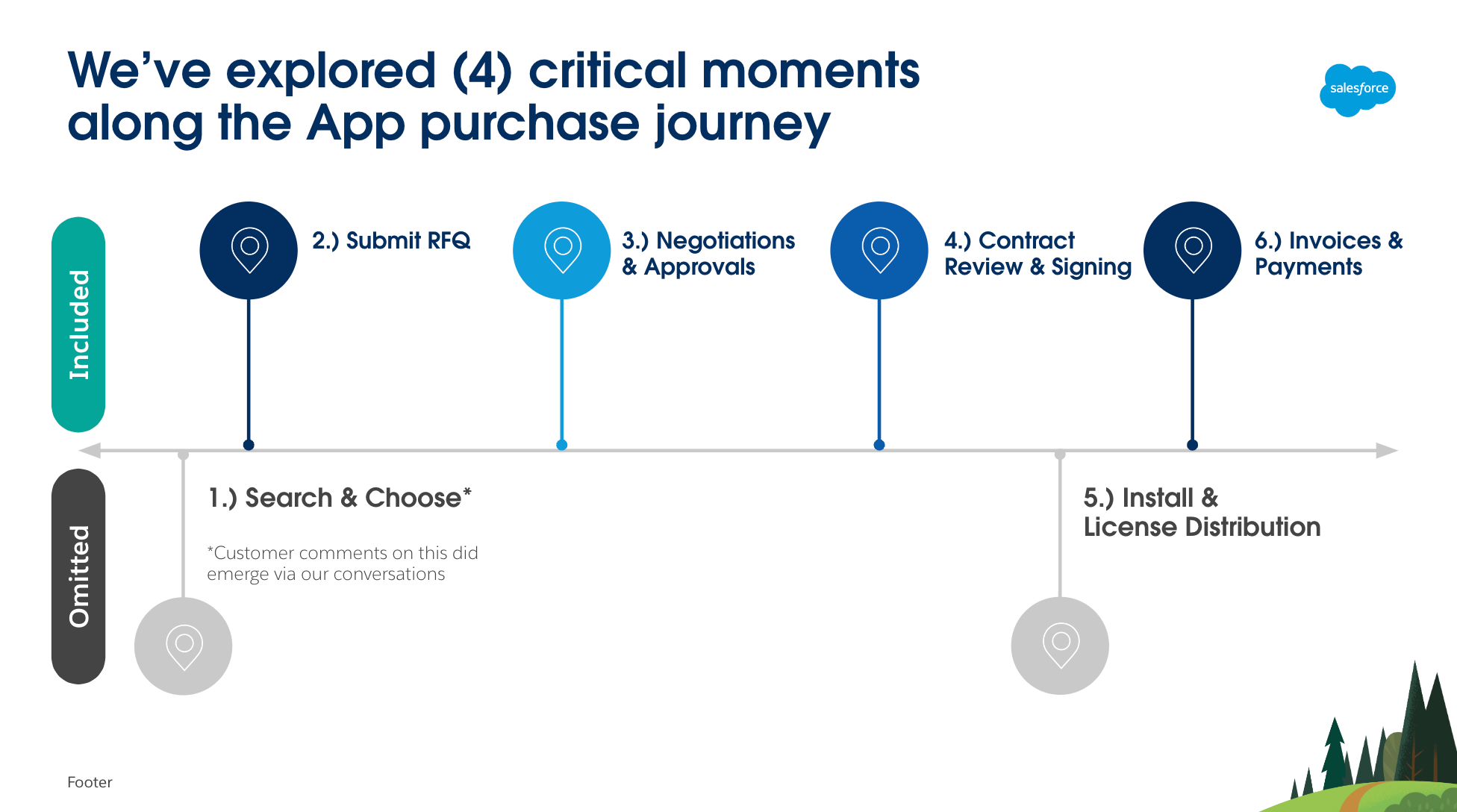
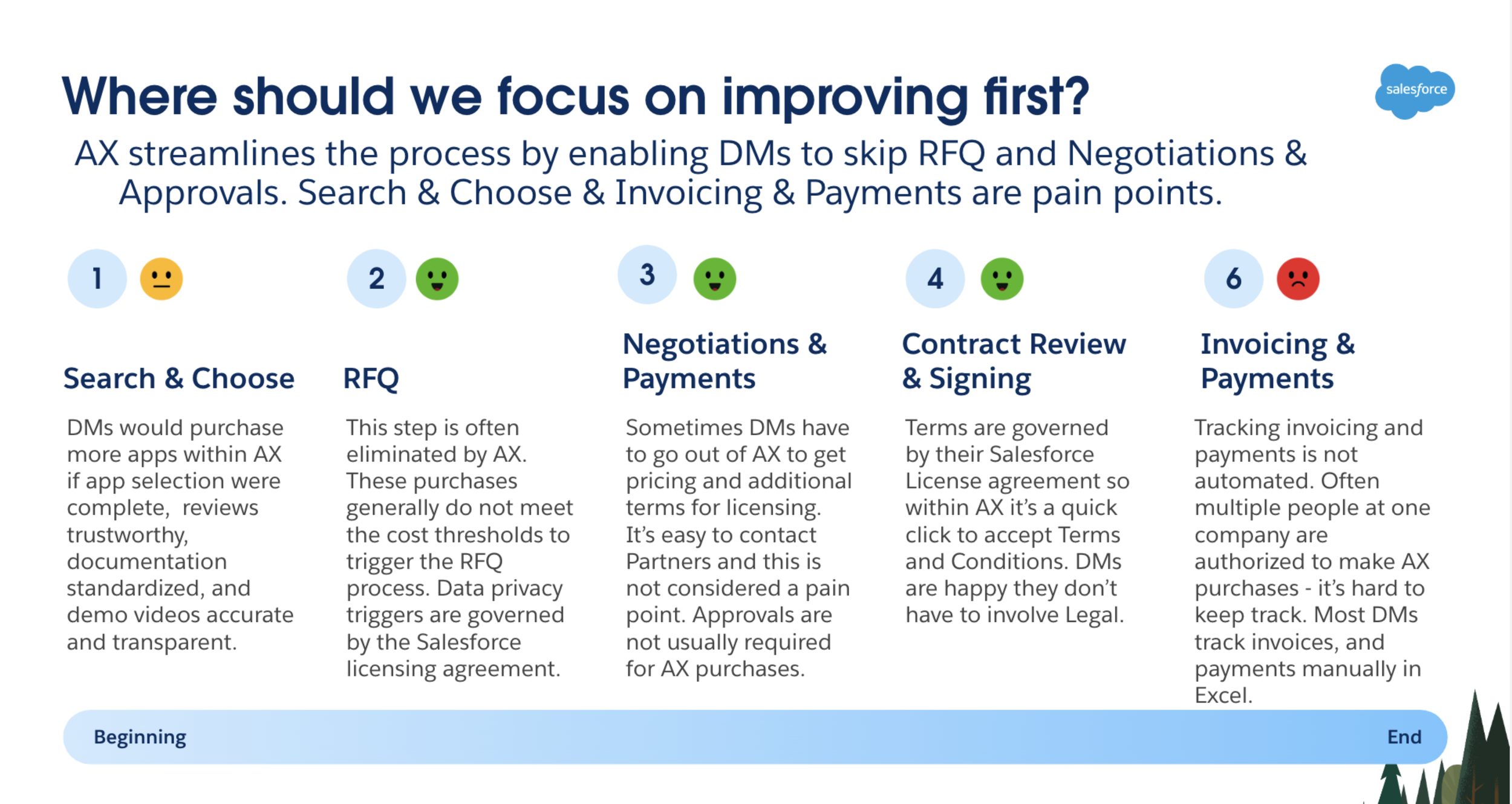
Design Strategy: From Directory to Transactable Marketplace
The core insight was that a single acquisition path couldn't serve both a $500 self-service app and a $500K enterprise deal. I designed a multi-path acquisition framework:
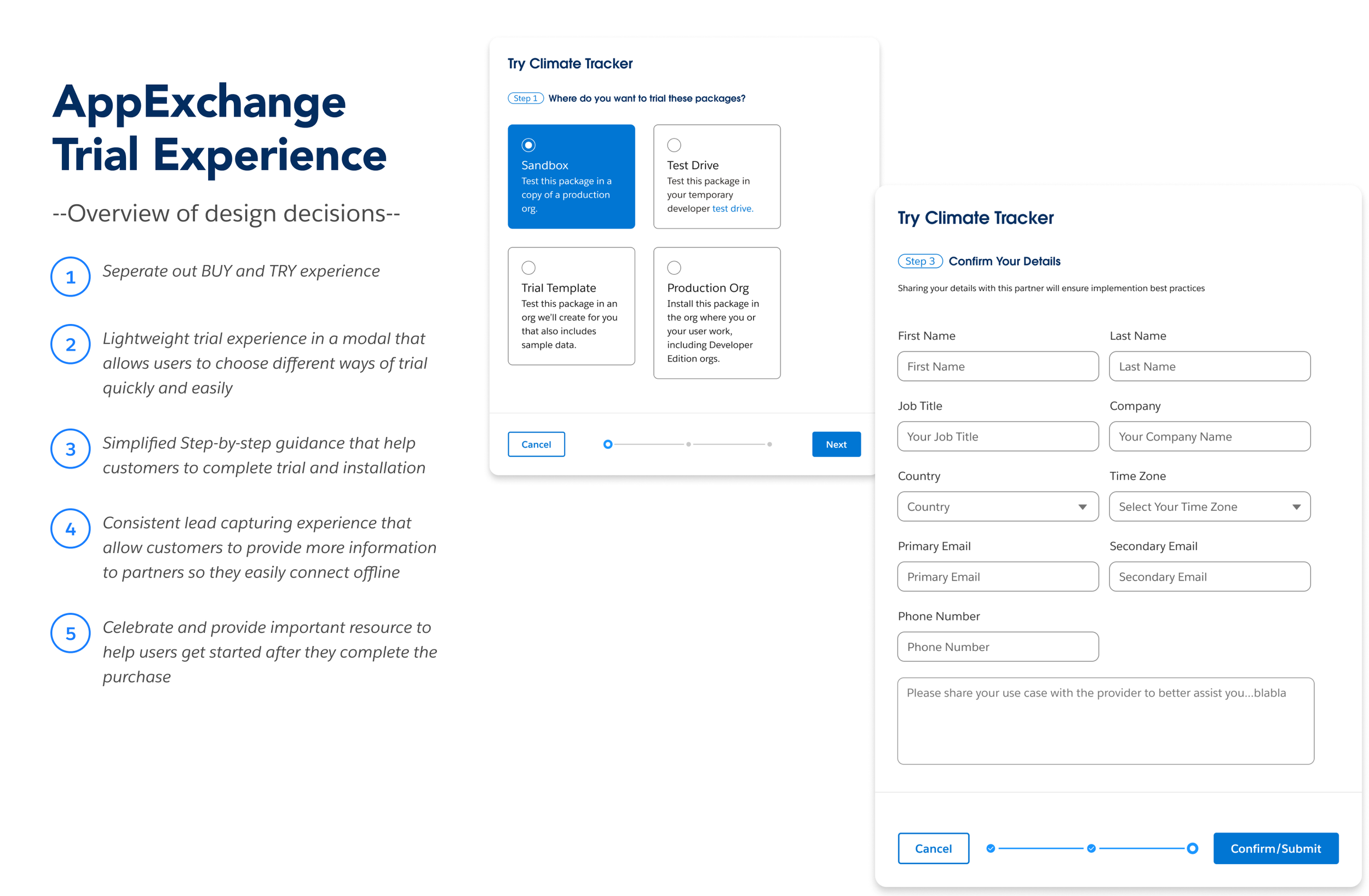
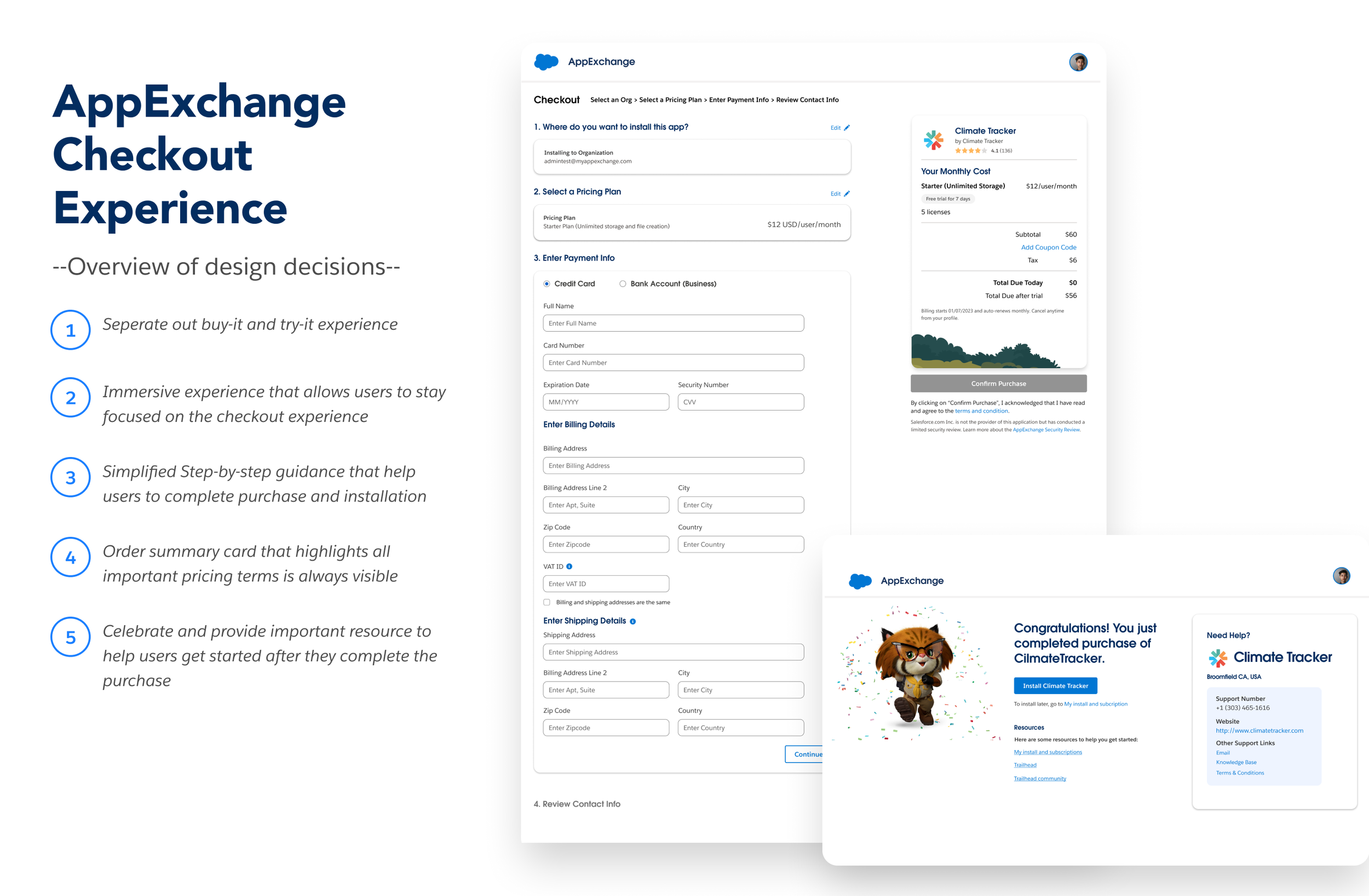
Self-service path: Simplified trial and purchase flow with guided steps and a transparent checkout experience
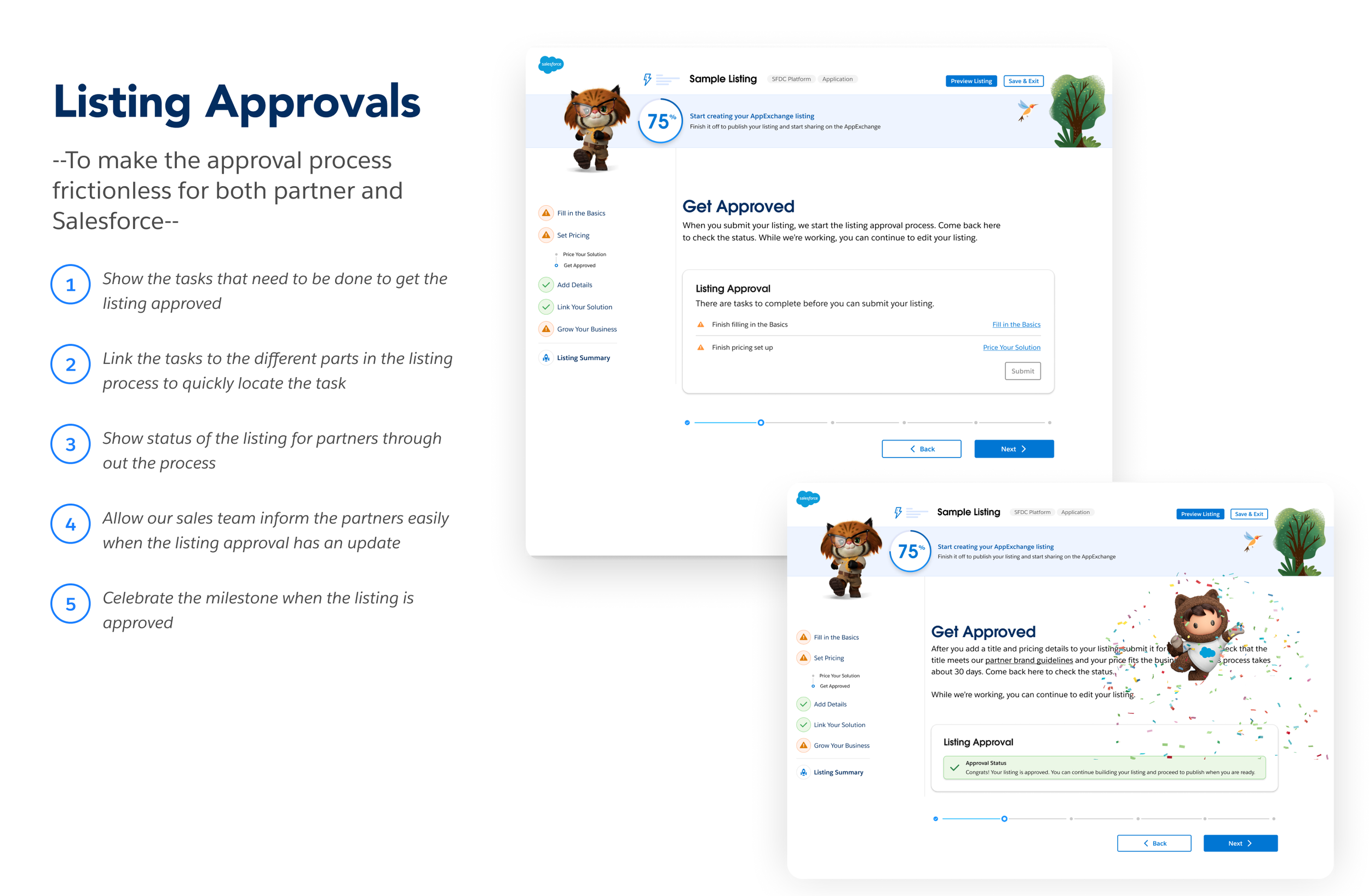
High-touch path: Structured lead capture that replaced fragmented offline communication, giving partners qualified intent signals
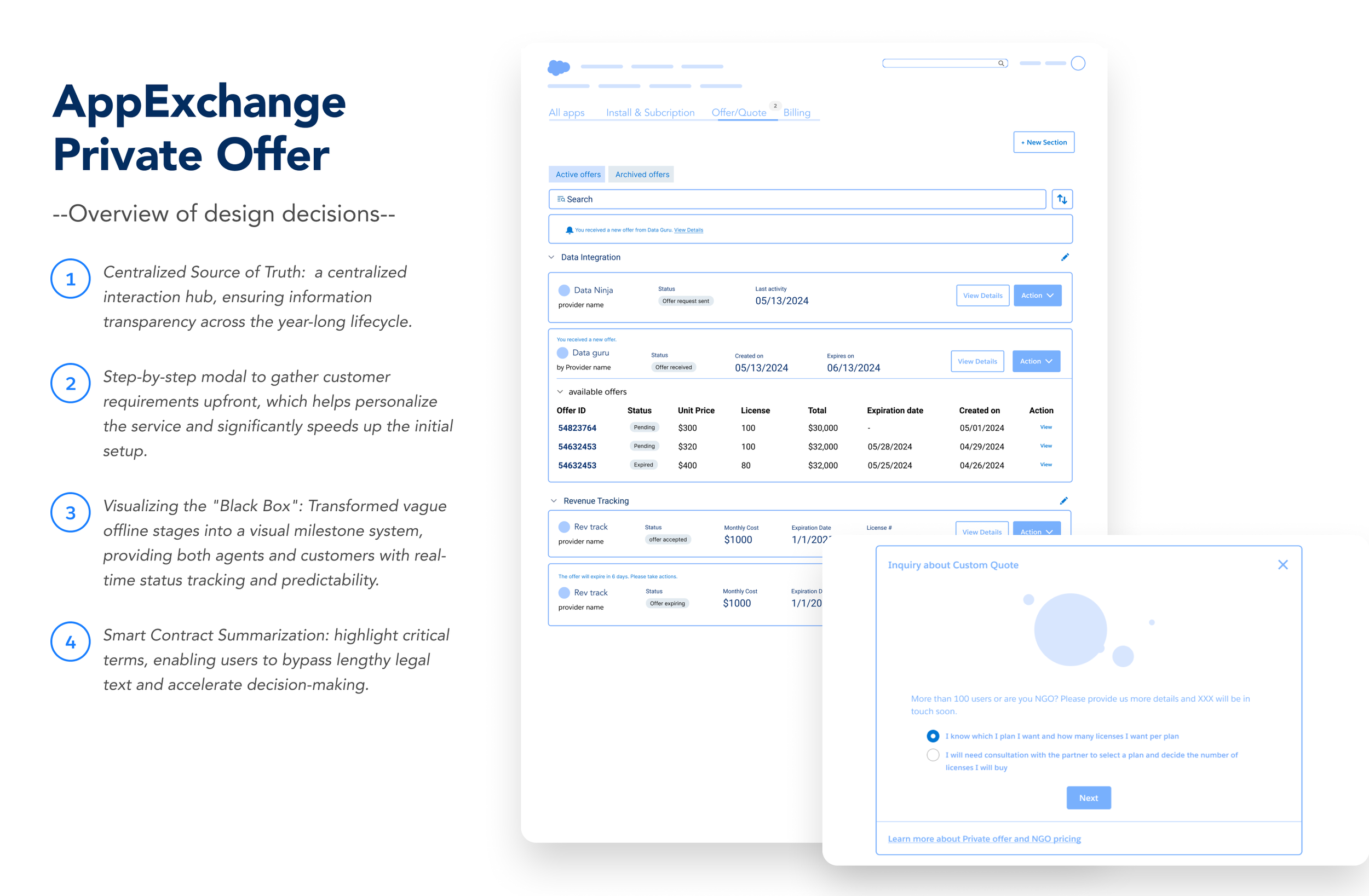
Private offers: A dedicated flow for custom enterprise pricing, reducing the offline negotiation cycle
Key Design Decisions
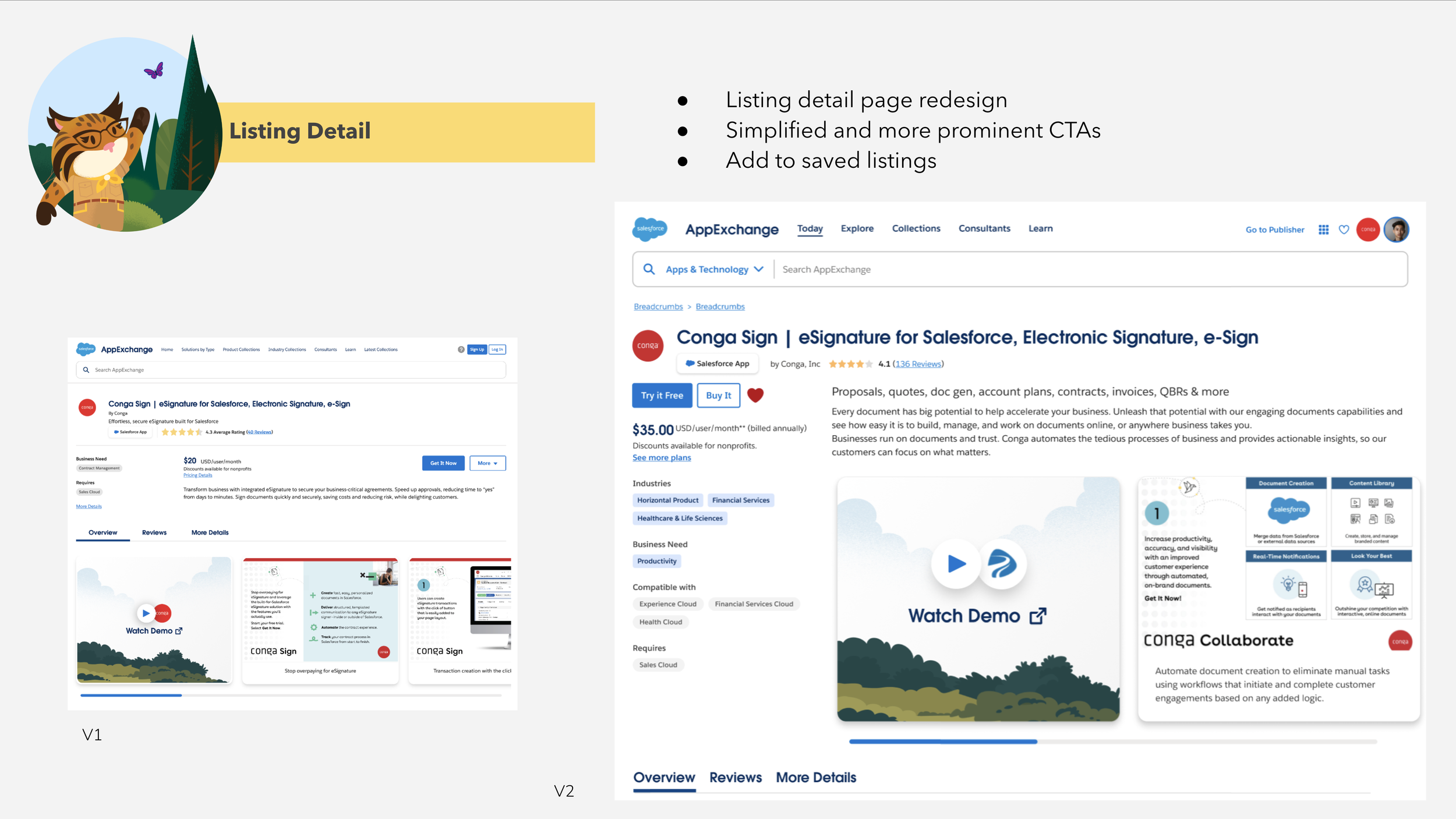
Listing detail page — Simplified CTAs to reduce decision paralysis. Added "Save for later" to accommodate enterprise buying committees with multiple stakeholders and long approval cycles.
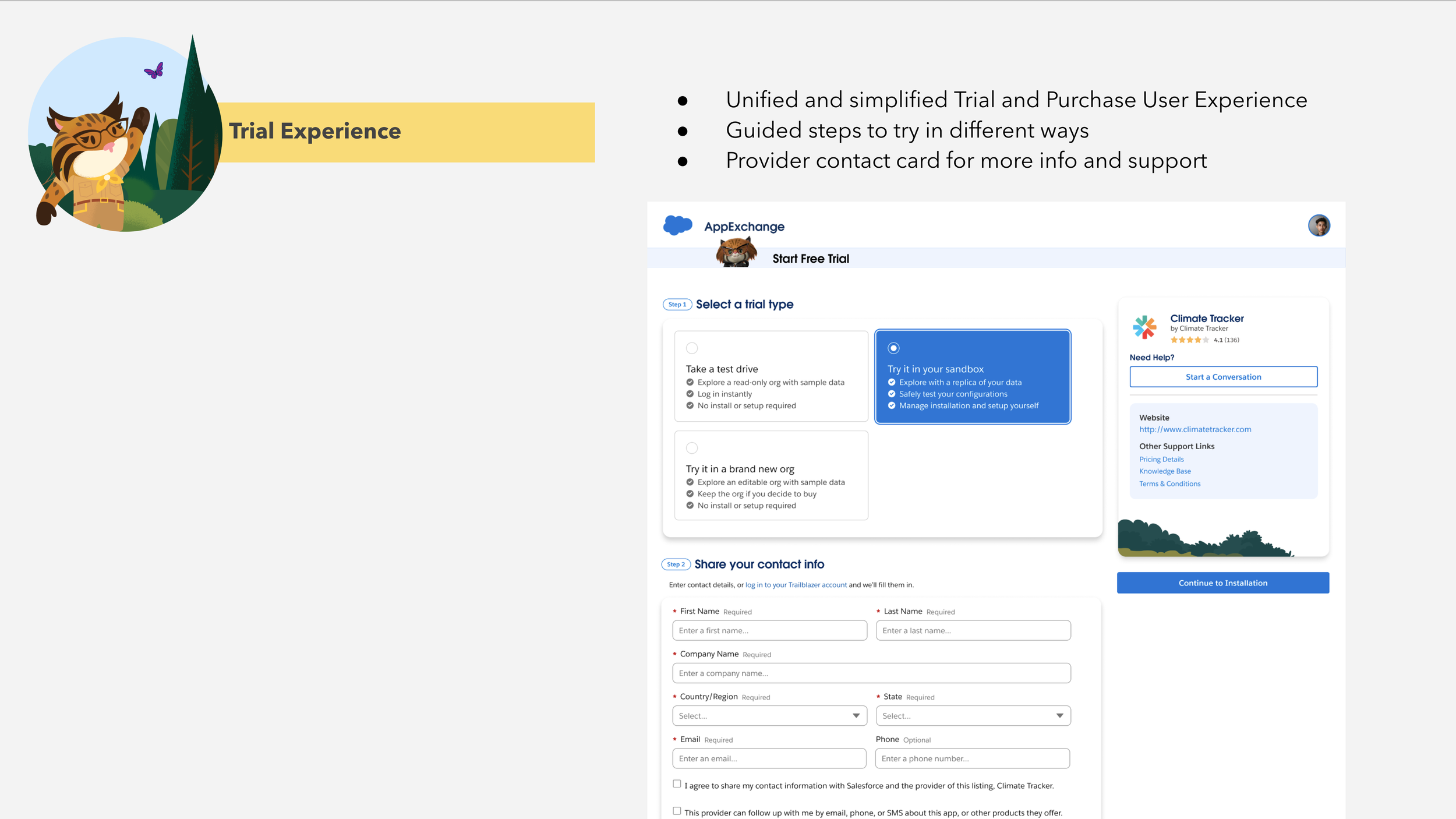
Trial experience — Unified the trial and purchase flows into a single guided experience with a persistent provider contact card, so buyers always had a path to human support when needed.
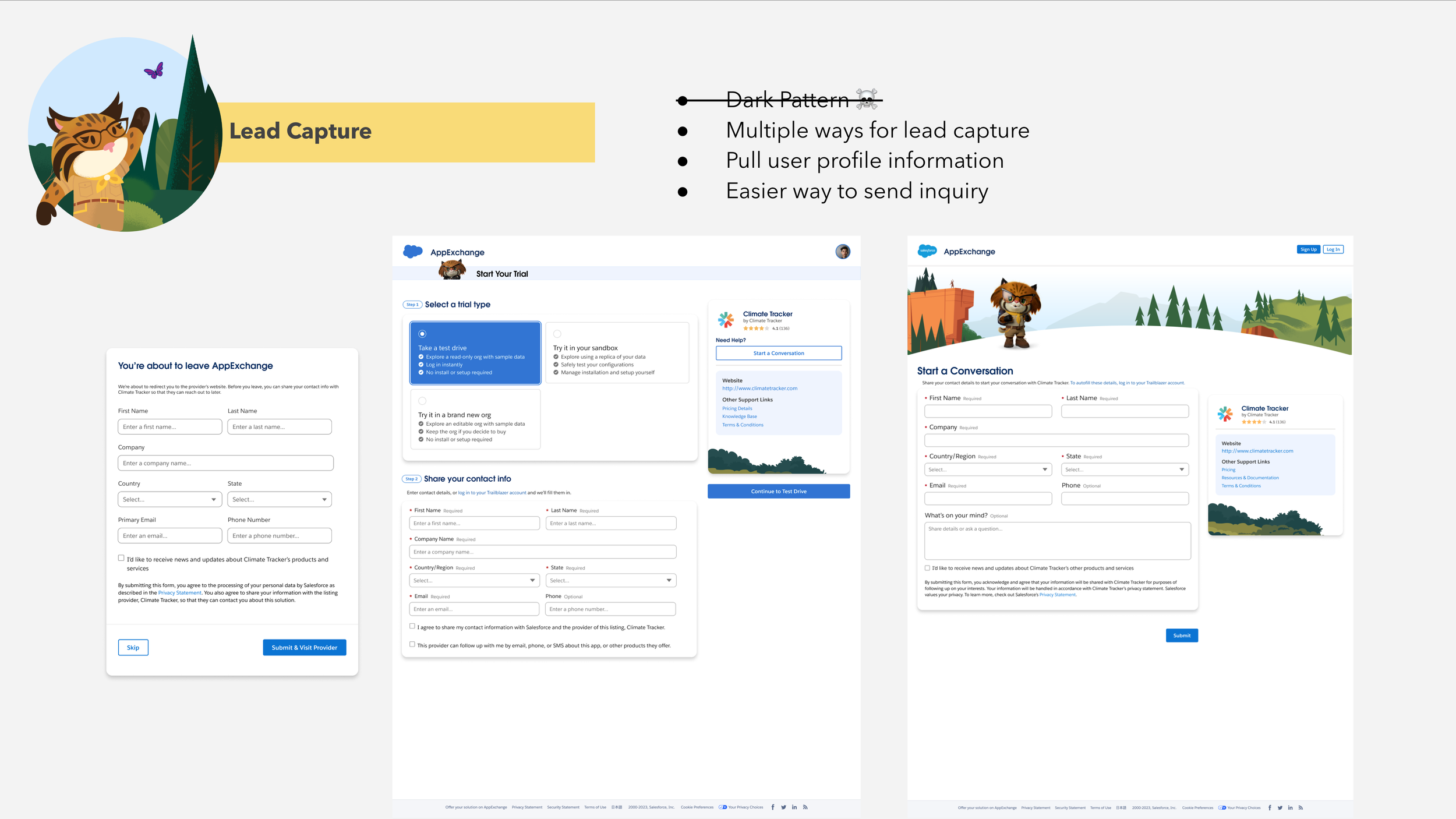
Lead capture — Replaced dark-pattern form fills with a structured inquiry flow that auto-populated user profile information, lowering friction for buyers while improving lead quality for partners.
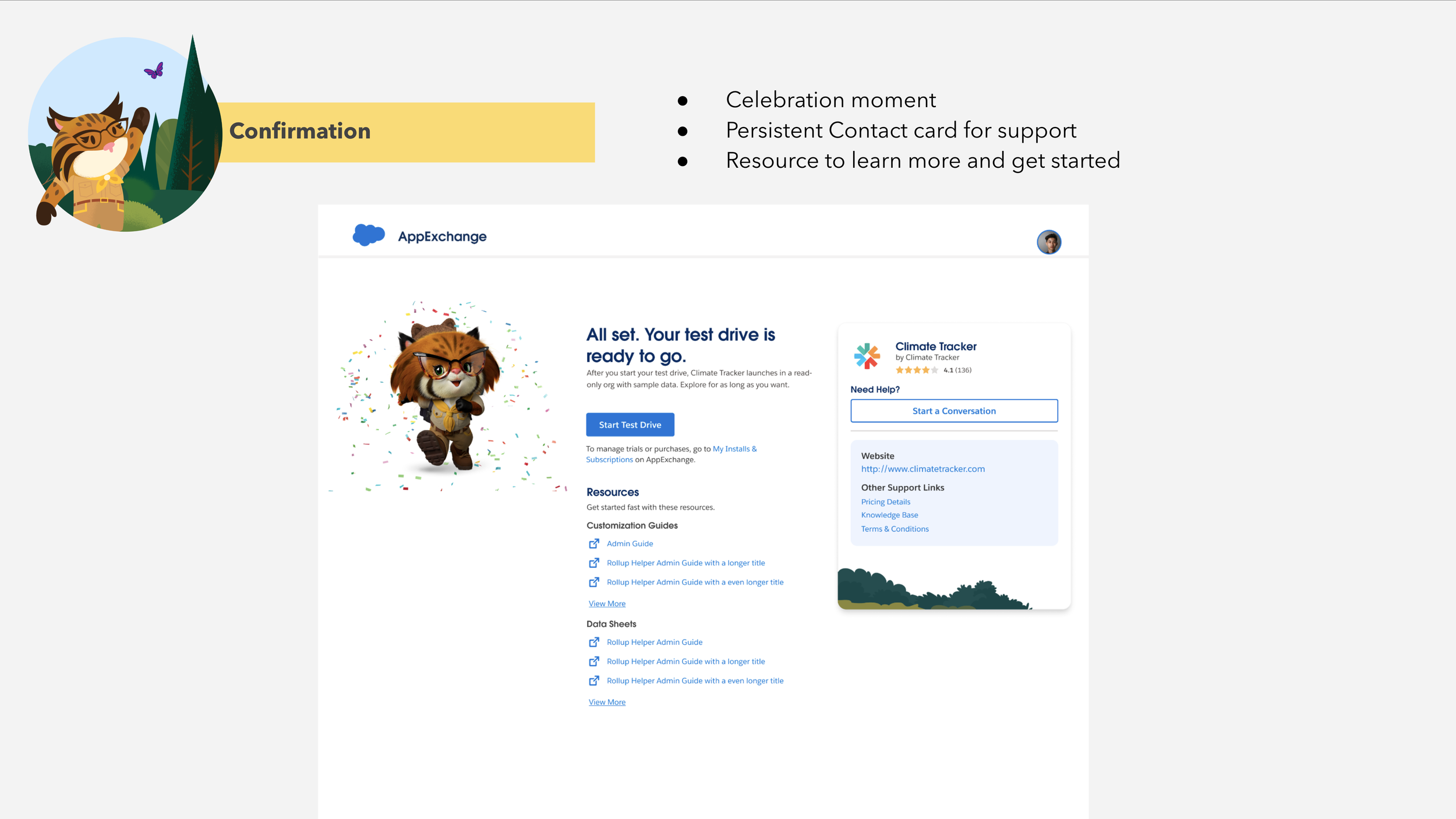
Celebration moment - Persistent contact card for support, resource to learn more and get started
Success Metrics
Increased ACV from AppExchange channel
Faster conversion — reduced time from discovery to purchase
Lower attrition rate through the acquisition funnel
Featured Work
Reflection: From Systems to Impact
My tenure at Salesforce was a masterclass in managing enterprise-scale complexity. While this page highlights the strategic shifts in the AppExchange ecosystem, the true value of this experience lies in the 'Systems Thinking' I developed—learning to balance technical constraints with complex business goals. This rigorous foundation is exactly what allowed me to lead the end-to-end design and operational strategy for NUDO, translating complex service protocols into seamless, high-growth human experiences.